How to Plate Sticky Toffee Pudding Like a Restaurant
A sticky toffee pudding can be the best thing on the table and still arrive looking like an accident. The gap between a bowl of brown and a plate that makes people pause is rarely the recipe. It is temperature, a clean pool of sauce, a cream quenelle that holds its shape, and one crunchy thing to cut the sweetness. None of it needs special equipment, and once you have done it a few times, the whole assembly takes about ninety seconds.
Start With the Pudding, Not the Plate
Plating is easy to fix. A collapsing pudding is not. Give the bake your attention first, because no swirl of sauce rescues a dense, dry centre.
Bake sticky toffee pudding in a shallow tray rather than a deep one. The shallower the bake, the more surface you get and the easier it is to cut neat portions. Let it cool for ten to fifteen minutes, then cut rounds with a 7–8 cm ring cutter. Press straight down and lift; twisting drags the crumb and leaves ragged edges. Wipe the cutter clean between cuts.
If you prefer individual puddings, butter small dariole moulds or ramekins and line the base of each with a circle of parchment. Turn them out while still warm and trim the domed top flat with a serrated knife so the pudding sits level.
Serve it warm, not volcanic. A pudding straight from the oven will melt a quenelle on contact and thin the sauce into a puddle of milk. Ten minutes of rest gets you steaming gently, which is exactly where you want to be.
The Sauce Is the Pool, So Watch Its Texture
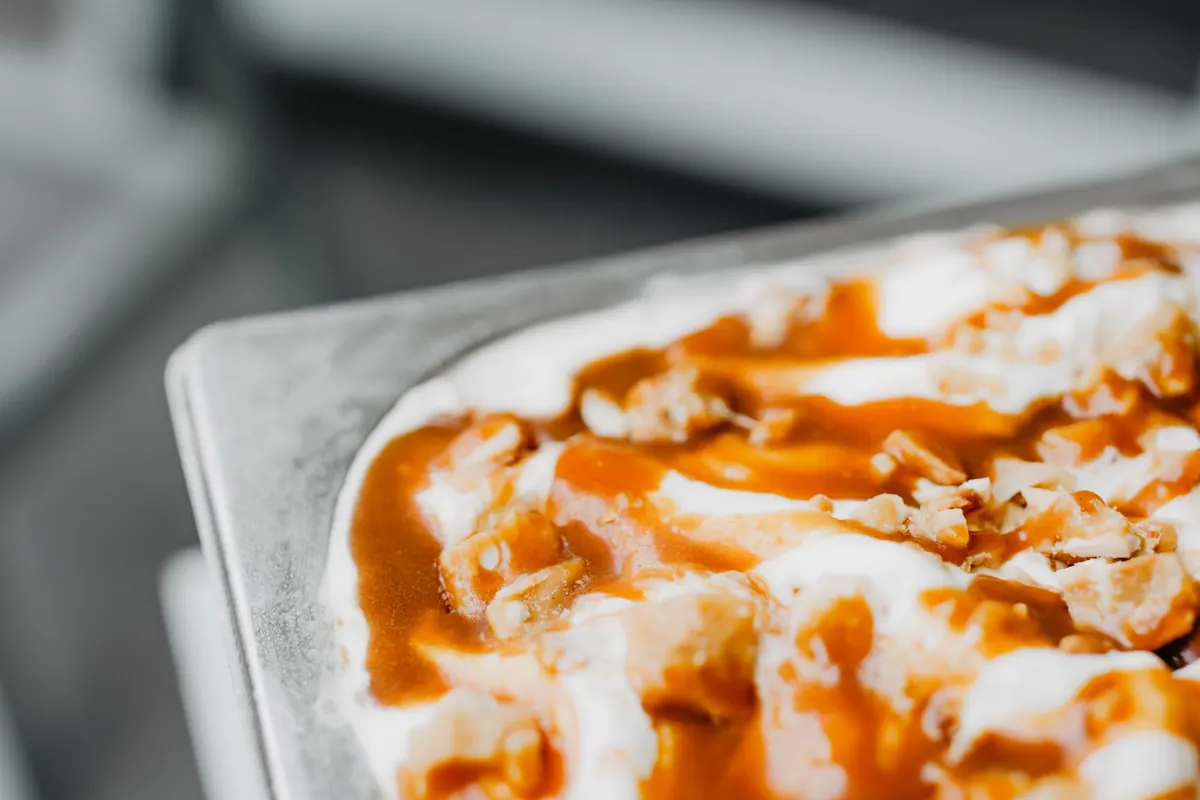
The sauce does most of the visual work on this plate, and it only behaves if it is the right thickness. Cook it until it coats the back of a spoon and falls in slow ribbons. If it runs off the spoon in a thin stream, keep reducing. If it sits in a stiff mound, loosen it with a spoonful of cream or hot water.
Now the pool. Hold the spoon low, about a centimetre above the plate, and pour in a slow spiral. Stop before the sauce reaches the rim. Tap the plate once or twice on the counter to level the surface, then wipe stray droplets with a damp cloth. A sauce pool should look poured, not thrown.
Position it off-centre, in the lower third of the plate, and leave the upper area clear for the cream and garnish. Two to three tablespoons per portion is plenty. A thin film of sauce reads as an afterthought; a generous pool reads as intention.
Small additions change the character of the sauce without changing its texture. A pinch of flaky salt, a teaspoon of whisky or dark rum, a little orange zest, or a scraped vanilla pod all work. Add them at the end, taste, and stop when it's balanced.
Dress the plate before the pudding lands on it. It's far easier to place a pool in open space than to work around a pudding that's already there.
A Cream Quenelle That Actually Holds
Cream choice matters more than technique. Clotted cream and crème fraîche hold a quenelle almost by themselves; double cream needs a light whip to soft peaks, and it should still droop from the whisk. Over-whipped cream turns grainy and won't form a smooth surface. Keep it cold until the second it hits the plate, and skip the sugar, since the sauce is already sweet.
The two-spoon method
- Chill two dessert spoons. Just before shaping, dip them in hot water and dry them; a warm, dry spoon gives the smoothest surface.
- Scoop a generous spoonful of cold cream and hold the spoon level.
- Pass the second spoon under and over the cream, rotating the first spoon slightly each time, until you have a smooth three-sided oval.
- Slide the quenelle onto the plate, next to the pudding rather than on top of it, so it stays cold and keeps its edge.
- Add the cream last, immediately before serving.
One quenelle per portion. Two looks like a scoop from a tub, and the plate loses its focus.
Add Crunch, Then Stop
Sticky toffee pudding is soft and sweet from the first bite to the last. Something crisp resets the palate and makes the plate look finished. Choose one or two from this list rather than all of them:
- Toasted pecans or walnuts, roughly broken so the pieces look deliberate.
- Honeycomb or cinder toffee, snapped into shards and used within an hour of making, before it turns tacky in the air.
- Candied ginger, diced small, for a sharp warm hit against the toffee.
- Thin tuile or brandy snap, broken into pieces and stood upright in the cream.
- Toasted oats or a spoonful of crumble, scattered lightly over the sauce.
- Flaky sea salt, a few grains on the cream, which makes everything else taste sweeter and more like itself.
Place the crunchy pieces on the cream or leaning against the side of the pudding. Anything buried in the sauce softens within a minute and stops doing its job.
One Plate, Start to Finish
- Warm the plate, then wipe it clean.
- Spoon the sauce pool off-centre and level it with a gentle tap.
- Set the trimmed pudding on the plate, partly resting in the pool.
- Spoon a thin ribbon of sauce over the top so it runs down one side.
- Shape the quenelle and place it beside the pudding.
- Add three pecan halves, two shards of honeycomb and a few grains of salt.
- Wipe the rim. Serve within a minute.
Plating for a Table of Six
Work in stages rather than one plate at a time. Keep the puddings warm on a tray in a low oven, hold the sauce in a jug set over a pan of simmering water, and warm the plates all at once. Lay out every plate and pool the sauce across all of them before you place a single pudding, then position the puddings, then the ribbons of sauce. Finish with cream and garnishes at the very end, moving down the line, so the first plate and the last look the same.Photo: ROMAN ODINTSOV / Pexels