Regional Fruit Garnishes for Puddings: A Seasonal Local Guide
Plain pudding is a blank page. A spoonful of poached quince from a tree three streets away, or a few slices of mango cut while the kitchen still smells of coconut, turns that page into something with a postcode. Fruit garnishes are the fastest way to make a dessert taste like it belongs to a particular place in a particular month, and they are the cheapest decoration you will ever put on a plate.
What follows is a way of choosing fruit by region and season, then matching it to the pudding already in front of you. Start at the market, finish at the bowl.
Start With the Calendar, Then the Map
Before you pick a garnish, answer two questions: what is in glut near you right now, and what will still look good after ten minutes sitting on a cold pudding? Local fruit wins on both counts, mostly because it was picked closer to ripe. A strawberry grown an hour away and eaten the same day carries more perfume than one that spent a week in transit, and perfume is most of what a garnish contributes once the cream is sweet and cold.
Local does not mean limited. Almost every region has a fruit that is quietly excellent and rarely exported: damsons in the English Midlands, sour cherries around the Great Lakes, black figs along the eastern Mediterranean, persimmons in Japan and Korea, tamarillos in New Zealand, guavas in northern South America. Build a short list of four or five of your region's best and rotate them through the year.
If you live somewhere with a hard winter, your local garnish for six months of the year may be dried, frozen, bottled or candied. That is not a compromise. Apricots poached in syrup last summer, frozen in their own liquid, beat a pale imported peach in January every time.
A Region-by-Region Starting Point
Climates vary within regions and regions overlap, so treat these as starting points rather than borders.
Cool, Temperate Climates
Rhubarb, apples, pears, quince, plums, blackcurrants, raspberries, cranberries and sour cherries. Much of this fruit is tart, which is a gift: it cuts through dense, sugary puddings. Pair rhubarb with a baked vanilla custard, roasted plums with bread pudding, blackcurrant compote with rice pudding, and thin slices of raw pear with anything containing almond.
Mediterranean and Mild-Winter Regions
Figs, apricots, peaches, grapes, pomegranate, blood oranges and lemons. The fruit here is softer and sweeter, so use it where it can sit on top rather than fight for attention. Halved fresh figs over panna cotta, peach slices over semolina pudding, pomegranate seeds over a yogurt-set cream, blood orange segments with a spoonful of their own juice.
Tropical and Subtropical
Mango, pineapple, passion fruit, banana, coconut, lychee, papaya, guava, starfruit. Acidity is your friend here. Spoon passion fruit pulp over coconut rice pudding, dress mango with lime and serve it with sago, or cook pineapple briefly in its own juice with a pinch of salt to tame the raw edge.
Arid and Desert-Influenced
Dates, dried figs and apricots, melon, prickly pear and other cactus fruits. Sweetness is high and moisture low, so these garnishes do well rehydrated. Simmer dates in tea or orange juice until plump, or soak apricots in warm syrup and spoon them over a firm set cream with a few toasted nuts.
Match the Fruit's Texture to the Pudding
Flavour pairing gets all the attention, but texture decides whether a garnish looks and eats well once it lands.
- Firm-set custards and panna cotta: soft, juicy fruit that slumps into the surface. Macerated berries, poached pear halves, roasted apricots.
- Sticky, dense puddings: sharp, structured fruit with skin and bite. Sour cherry compote, stewed rhubarb, thin apple slices.
- Loose creamy puddings (rice, sago, tapioca): fruit in two forms. Chop some through while warm, then finish with a spoonful of syrup or purée on top.
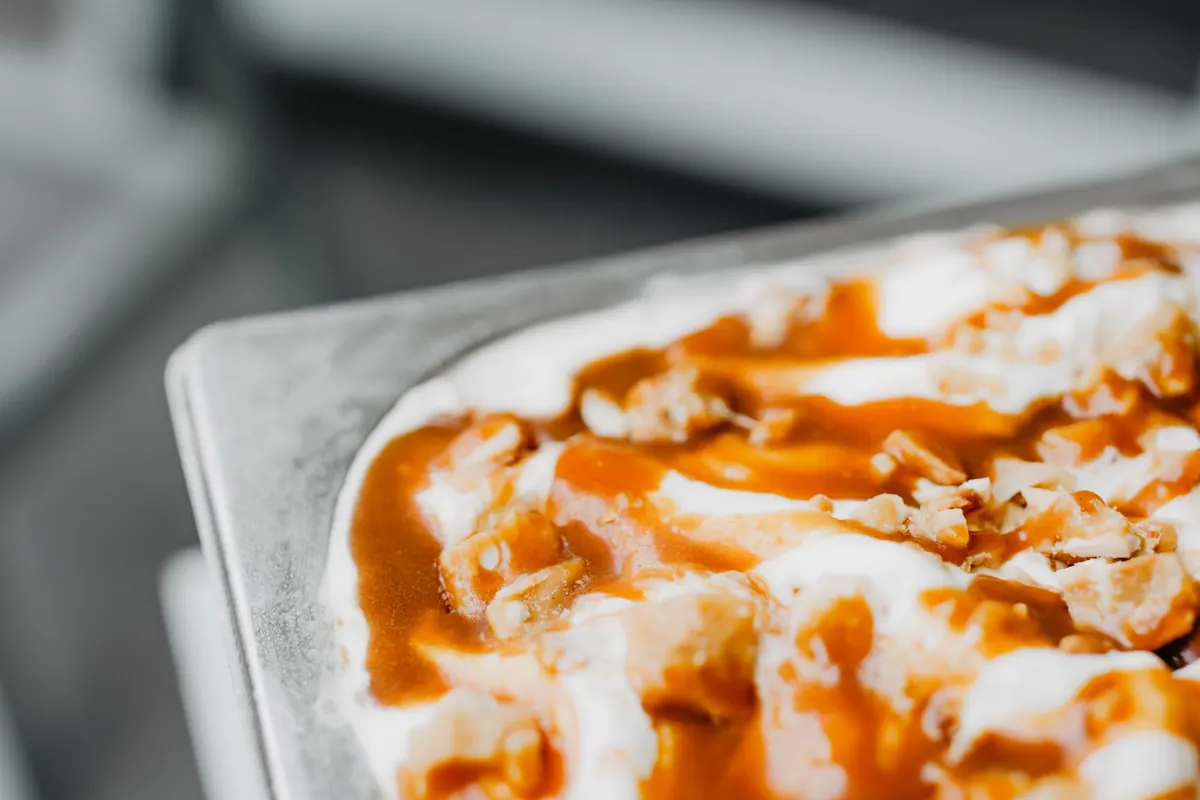
- Frozen and whipped desserts: a fruit ribbon or something crisp. Fold purée through at the last second for streaks, and add fresh fruit only as you serve.
- Crumbles and baked fruit puddings: cooked fruit underneath, raw fruit on top for contrast. A few raspberries over hot crumble do more than any sauce.
Four Ways to Prepare the Same Fruit
Nearly every garnish comes down to four techniques. Knowing them lets you work with whatever is on the counter.
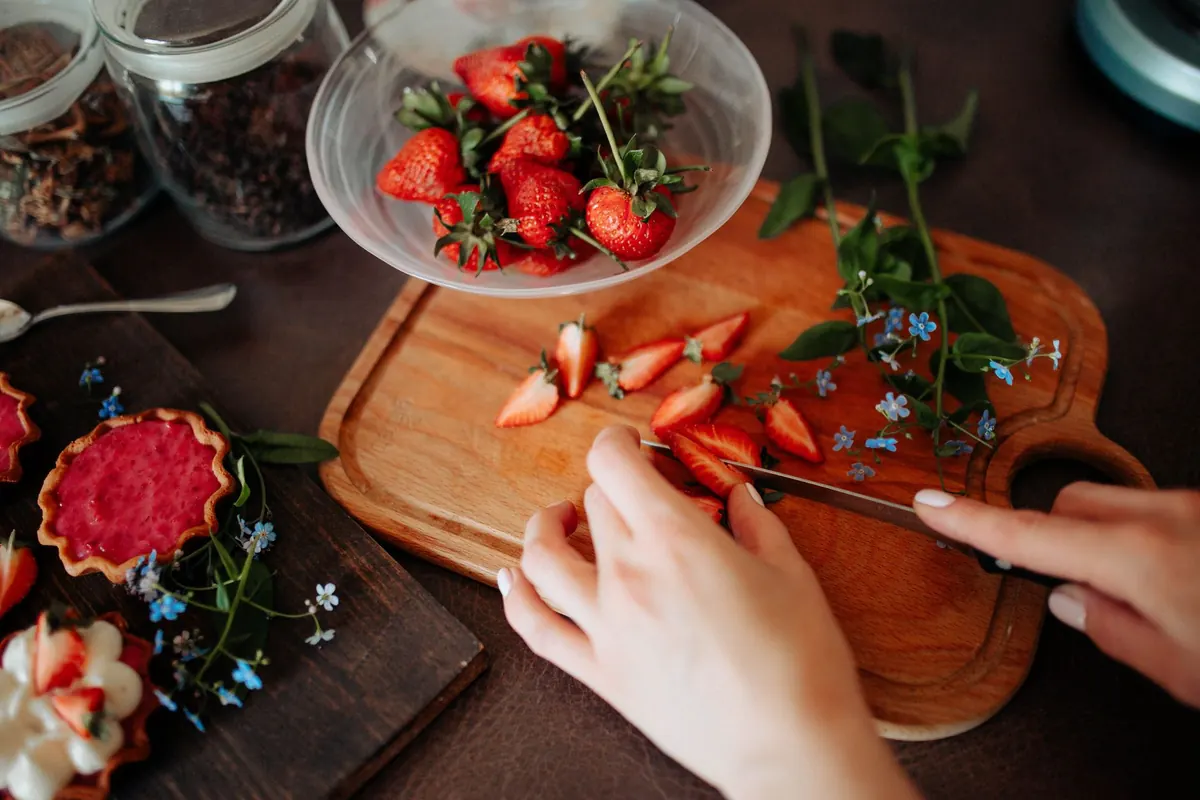
- Fresh, cut to order. Slice stone fruit, hull berries and cut banana at the last moment. Toss apples, pears and banana in a little lemon juice if they will sit for more than a few minutes.
- Macerated. Sprinkle fruit with a tablespoon of sugar, a pinch of salt and a small splash of vinegar, citrus juice or liqueur. Leave for 20 to 30 minutes. The syrup that forms is the garnish.
- Poached. Simmer gently in syrup made from equal parts sugar and water, with a strip of citrus peel, a vanilla pod or a few peppercorns. Whole pears and quinces need 30 to 60 minutes; apricots and peaches need closer to 10. Cool the fruit in the syrup and keep it there.
- Roasted or grilled. Halve stone fruit, dust it lightly with sugar and cook cut-side down in a hot pan or under a grill until the edges catch. A little char keeps a sweet pudding from turning cloying.
Dried fruit is a fifth route and a useful one: plump figs, dates, apricots or raisins in hot tea or juice for half an hour, then slice and use as you would fresh. Candied peel and freeze-dried berries earn their shelf space in the months when nothing local is ripe. If you forage rather than shop, be certain of what you have picked and sure that picking is allowed where you are.
Adjusting for Sweetness, Acid and Colour
If a pudding tastes flat, the problem is usually acid, not sugar. Lemon juice, a splash of vinegar, a spoonful of yogurt or crème fraîche will sharpen the whole bowl. If the fruit is fierce, as rhubarb and blackcurrant often are, reach for a pinch of salt before you reach for more sugar. Salt makes fruit taste more like itself.
Serve fruit at room temperature. Cold mutes aroma, and a garnish straight from the fridge will taste of almost nothing next to a warm pudding.
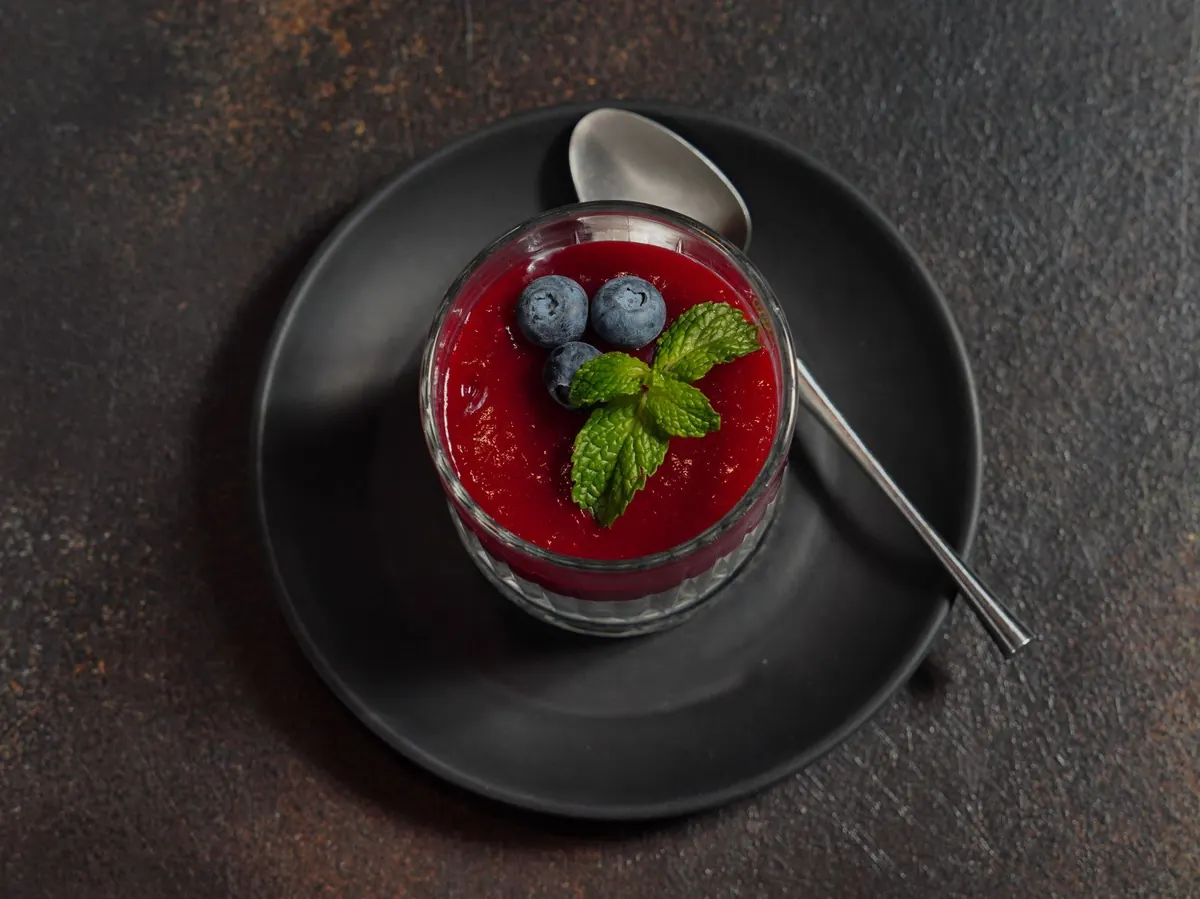
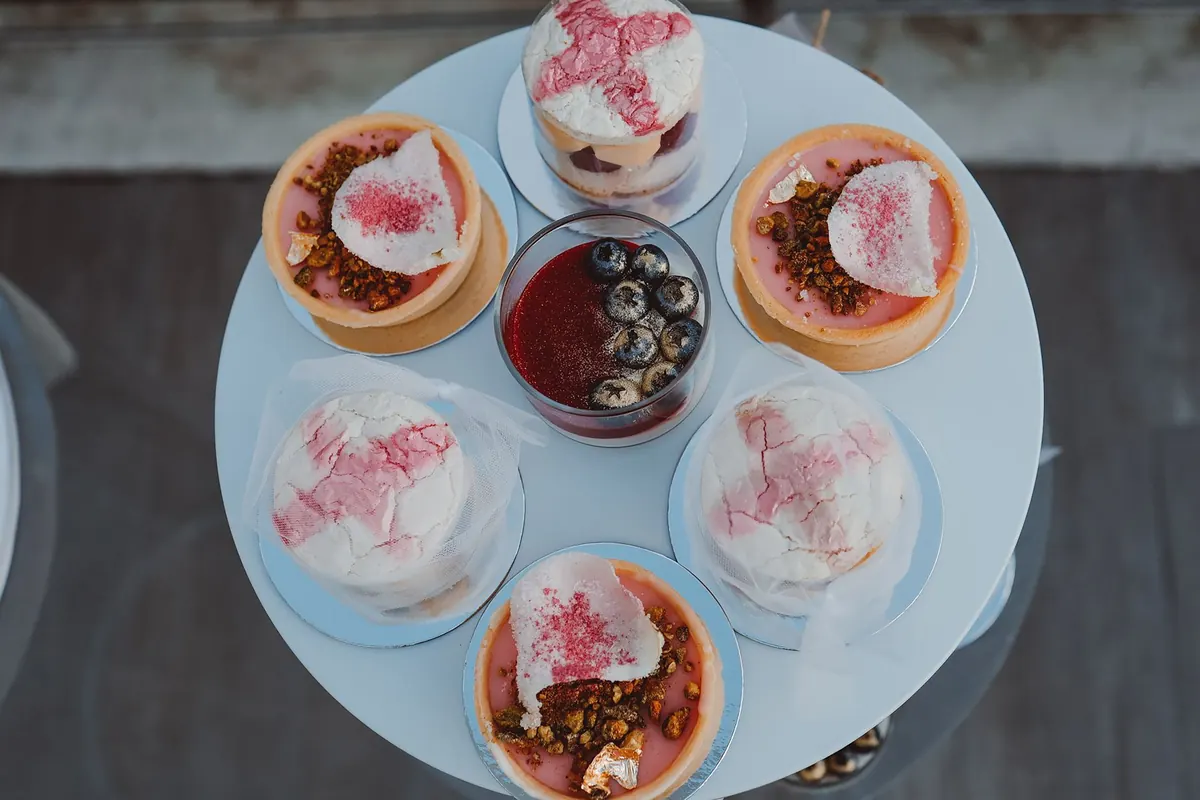
For colour, use contrast rather than quantity. Pale puddings take dark fruit: blackberries, cherries, figs, pomegranate. Brown puddings take bright fruit: blood orange, raspberry, mango. Place the fruit in one deliberate cluster with a spoonful of syrup rather than scattering pieces across the surface, and leave a little pudding visible. Three pieces arranged with care look more generous than ten thrown on.
One fruit, prepared well and spooned over with its own syrup, will beat a mixed pile of six fruits every time.
Keeping a Garnish Ready Through the Week
Weeknight pudding decoration should take seconds, not a shopping trip. Keep one jar of macerated berries or poached fruit in the fridge, and freeze fruit purée in ice cube trays so you can drop a single portion into a pan or a bowl. When your region's best fruit hits its peak, buy more than you can eat, poach or macerate the surplus and freeze it in its syrup. Labelled and dated, that stash will carry you through the quiet months.
Then the whole routine is simple. Open the fridge, spoon two tablespoons of something local over the pudding, and add one crisp or creamy element for contrast. That is the entire method, and it works from Aberdeen to Adelaide.
Photo: Danik Prihodko / Pexels