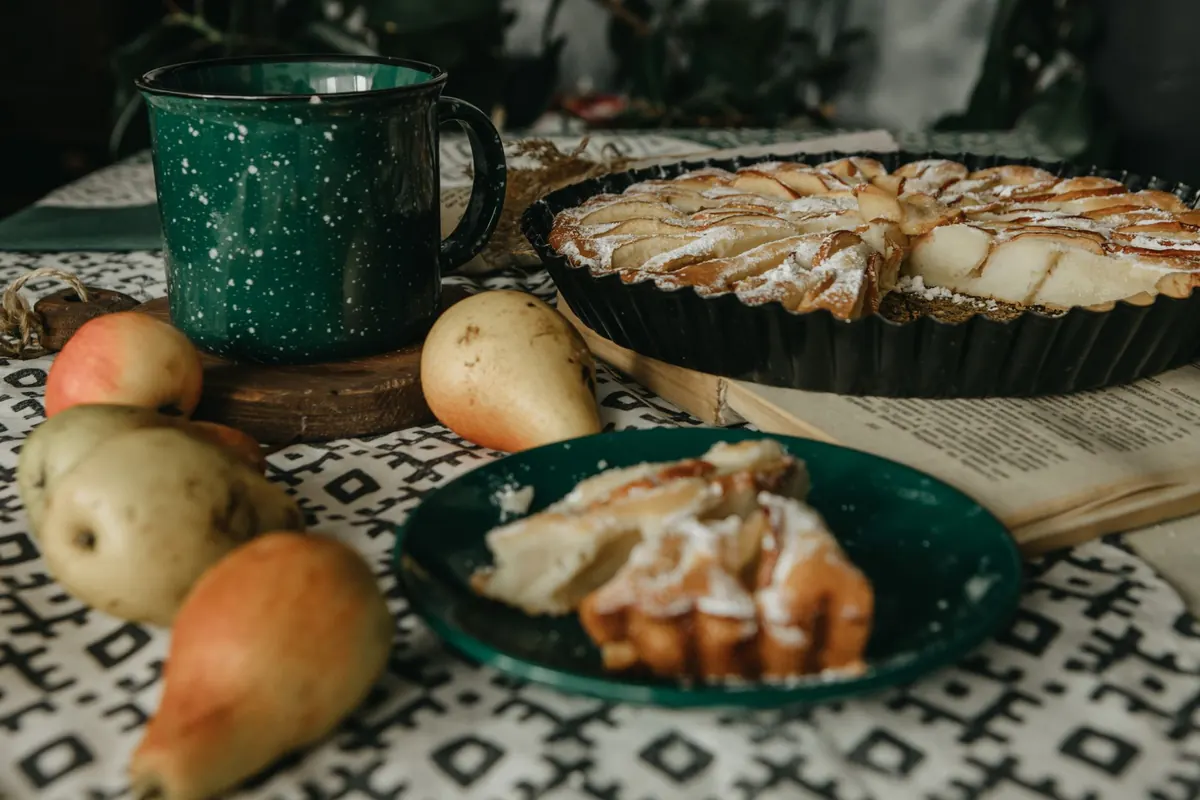
Autumn Pudding Garnishes: Apples, Pears, and Cinnamon Decorations
An autumn pudding — a steamed sponge, a baked rice pudding, a dish of stewed fruit under a crumble lid — already tastes like the season. What it often lacks is something to look at. This is where apples, pears and cinnamon earn their keep. The same fruit that flavors the pudding can finish it, and none of it needs a pastry chef's toolkit. Three firm apples, one slightly underripe pear and a jar of cinnamon quills will take you further than most people expect.
Choose Fruit That Holds Its Shape
Mealy fruit collapses the moment it meets a warm pudding, so start with structure. Look for tart, dense apples: Braeburn, Granny Smith, Pink Lady, or the small russets that appear at farm stands in October. They slice cleanly, keep an edge when cooked, and their acidity cuts through custard and caramel.
Pears are trickier. A ripe Comice is wonderful to eat and useless as a garnish; it slumps into a pale smear. Choose Conference, Bosc or a firm Bartlett, ideally a day or two before full ripeness. They poach in clean halves, hold a fan of slices without tearing, and brown far more slowly than apples.
Whatever you cut, keep a bowl of cold water with a squeeze of lemon nearby. Apple and pear flesh oxidizes within minutes, and a quick dip buys you an hour of good looks. Pat the pieces dry before plating, or the water will thin your sauce.
Apple Garnishes: Roses, Crisps and Matchsticks
Apple roses
Thin, even slices curl into a convincing bloom, and one apple makes two or three roses.
- Halve and core a firm apple, then slice it paper-thin on a mandoline or with a sharp knife. Leave the skin on for the red edge.
- Warm the slices for 20 to 30 seconds in a pan with butter, a little sugar and a squeeze of lemon until they bend without snapping. Let them cool enough to handle.
- Overlap six to eight slices in a line, skin side up, and roll the line into a spiral. Press the base together.
- Set the rose in a muffin tin or small ramekin and bake at a low temperature for 15 to 20 minutes, until the edges ruffle and the apple turns translucent.
- Cool completely before moving it. A warm rose falls apart; a cool one holds.
Quick apple garnishes
Apple crisps. Slice thinly, dust with cinnamon sugar, and dry in a low oven (around 100°C / 210°F) for an hour or more, turning once. They keep for a day in an airtight tin and stand upright in a spoonful of cream.
Matchsticks. Julienne raw apple into fine batons, dress them in lemon juice and a pinch of sugar, and pile them beside a wedge of pudding. They bring crunch where everything else is soft.
Sautéed wedges. Brown thick wedges in butter and brown sugar until the edges caramelize but the centers stay firm. Serve warm, two or three to a plate.
Pears: The Quieter Option
Pears do elegance better than apples. A poached half, its cut face glossy with syrup, sits on a pudding like it was always meant to be there. Poach them in cider, white wine or a simple vanilla syrup, keeping them barely covered so they hold their shape. Red wine poaching gives a garnet surface that looks striking against pale cream.
For something lighter, peel a pear, slice it thinly, keep the slices in order and slide them onto the plate with a spatula. They spread like a hand of cards. Leave the skin on a few slices and arrange them as leaves around the fan; the faint green edge reads as foliage without any actual decoration. Pear chips work like apple crisps but take cinnamon and star anise especially well — dust them while still warm so the sugar sticks.
Cinnamon in Four Forms
Cinnamon is the season's connective tissue. It ties apple to pear, and both to custard.
- Quills. A single quill laid across a pudding, or stood upright in whipped cream, gives height and a clean line. It also perfumes whatever sits beside it.
- Ground, through a stencil. Lay a paper cutout — a leaf, a star, a simple circle — on a set custard and dust cinnamon over it. Lift the paper slowly. The trick works best on white surfaces: cream, meringue, a snow of icing sugar.
- Cinnamon sugar. Mix ground cinnamon into caster sugar, roughly one part to eight, for pastry lids, poached fruit or the rim of a glass bowl. Sift it for an even finish.
- Bark shards. Snap a quill into irregular pieces and scatter them over the plate at the last moment. They look like broken slate and taste surprisingly strong, so use three or four per plate, not a handful.
One caution: ground cinnamon turns bitter if it sits on a wet surface too long. Dust at the moment of serving rather than an hour ahead.
Colour, Contrast and Height
Autumn garnishes live in a warm range — amber, russet, gold, deep red, brown. That palette can turn muddy fast, so build in contrast. Cream, crème fraîche, vanilla ice cream and pale custard all pull the colours forward. So does something dark: toasted walnuts, a few blackberries, a scatter of chocolate shavings.
Aim for three elements, not eight. A pudding with a poached pear half, two cinnamon shards and a spoon of whipped cream looks composed. The same pudding buried under fruit, nuts, seeds, syrup and mint looks like it lost an argument.
Height matters as much as colour. Lay a quill across the top, stand crisps upright in the cream, or lean a pear fan against the pudding rather than laying it flat. Even a modest plate reads as deliberate when one element rises above the rest.
Timing, Storage and Practical Notes
Most fruit garnishes are best the day they are made. Apple roses and crisps soften overnight; matchsticks brown. If you need to work ahead, keep the components separate: dry crisps in an airtight tin, poached pears in their syrup in the fridge for up to three days, cinnamon sugar mixed and stored in a jar.
Add cold garnishes to warm pudding only at the moment of serving, or the heat will steam your crisps and wilt your roses. Have everything else ready — plates, spoons, sauce — before the pudding comes out of the oven.
One last thing worth saying plainly: if you are cooking for anyone with a food allergy or a restricted diet, check what went into the poaching liquid, the sugar and the cream before serving. Cinnamon is common enough to be rarely a surprise, but alcohol in a poaching syrup often is.
A Garnish You Will Actually Repeat
Start with one apple, one pear and a quill of cinnamon. Make a rose, dry a tray of crisps, poach a pear half in cider. Serve them on the same pudding across three weeks and you will learn which ones suit your kitchen and your hands. The best autumn garnish is not the most elaborate. It is the one you can make on a Tuesday evening without thinking twice.
Photo: Марина Вотинцева / Pexels